Category: Uncategorized


Artist Statement for Foster/White

June 28th, 2010 — 7:53pm
CAM ART-002

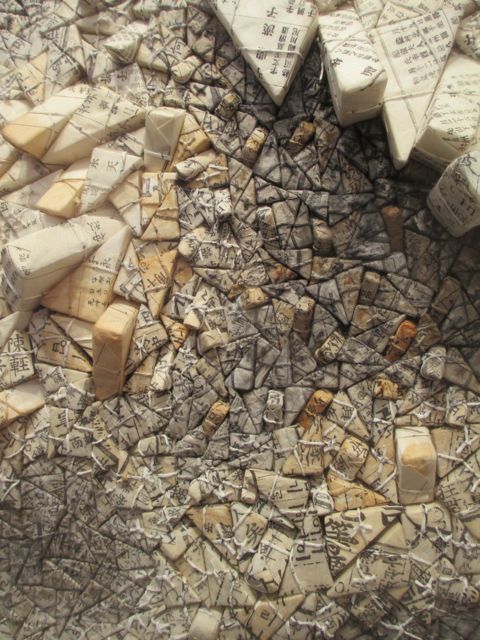
Seedpod Seven detail

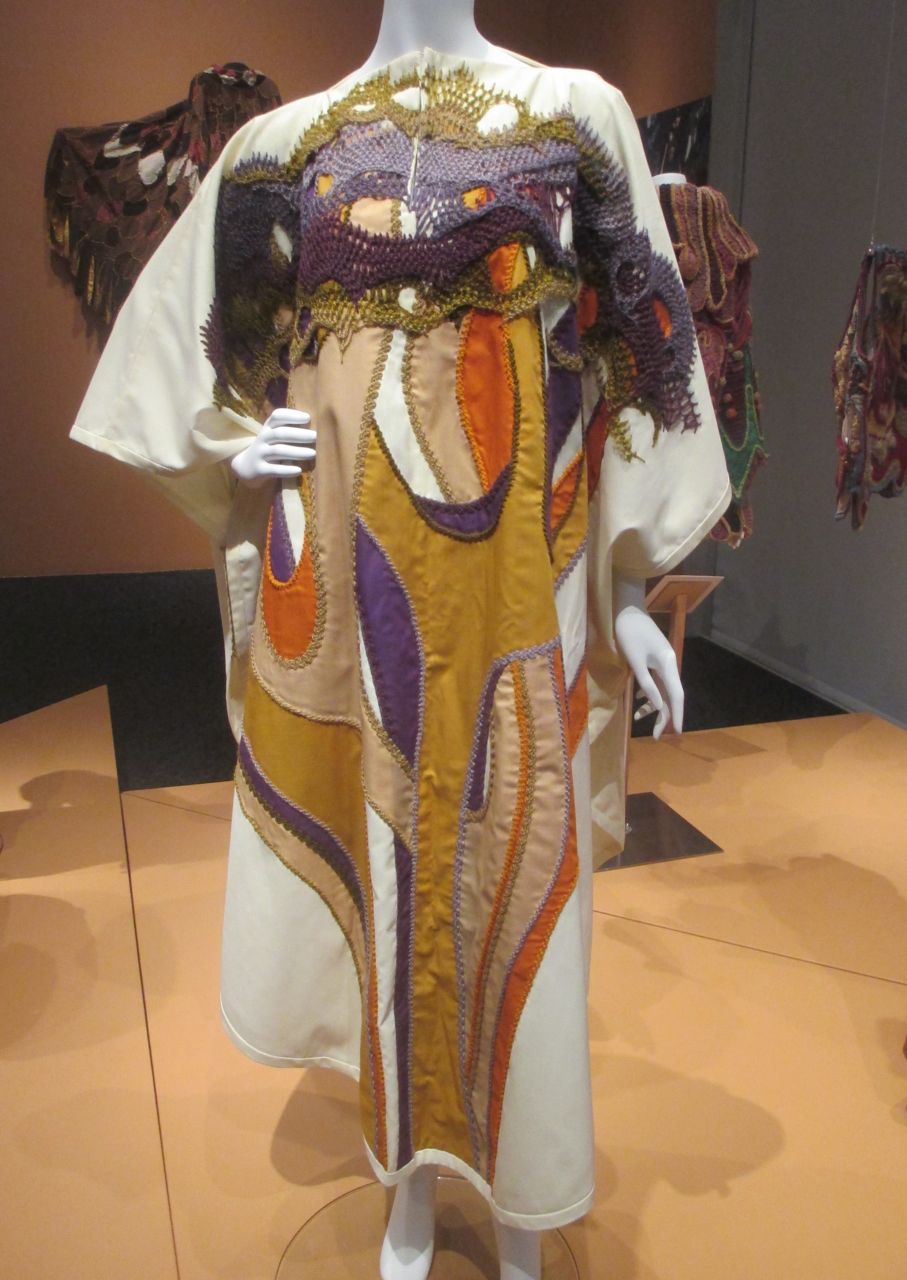
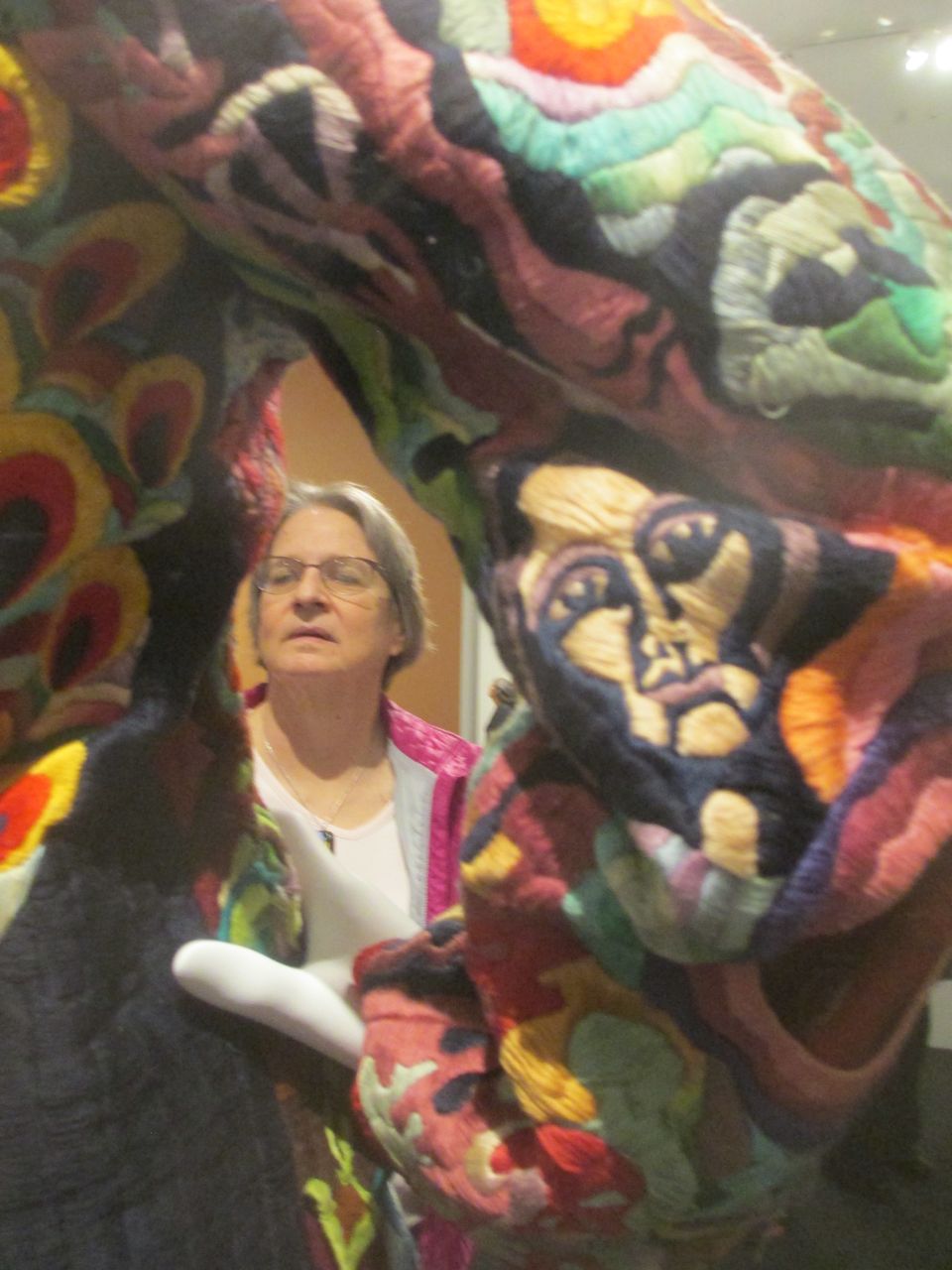
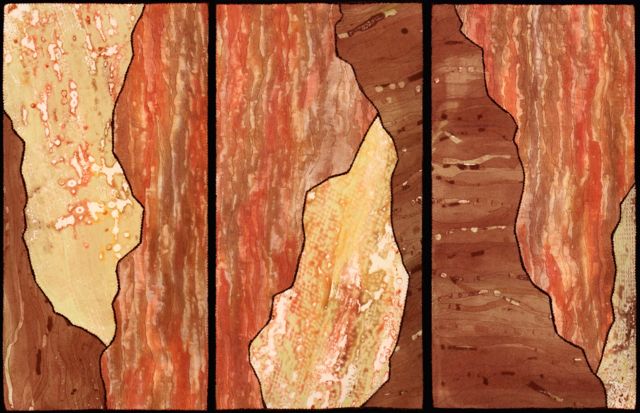
My work is inspired by nature and the touch of human hands upon it. The fabrics are maps implying ancient messages. The forms are documents of the passage of time.

Seedpods hold the germ of life, receptacles of potential, able to burst forth with new growth or slowly drying up into reminders of what could have been. I began working with this particular form at the end of 2009. This Spring I traveled to Hawaii, and on my walks found seedpods in the shape that I had begun drawing months earlier. I was amazed by the variation of the simple form, the warts and bumps and undulations. This inspired me to focus on the one shape for this series, finding richness in a narrow groove.

Both the Artifact and the Vessel Series interpret natural forms and textures through the lens of culture. These pieces reference the vessel form as both useful and sacred object, an imagined series of Rosetta Stones discovered by an archaeologist’s assistant.

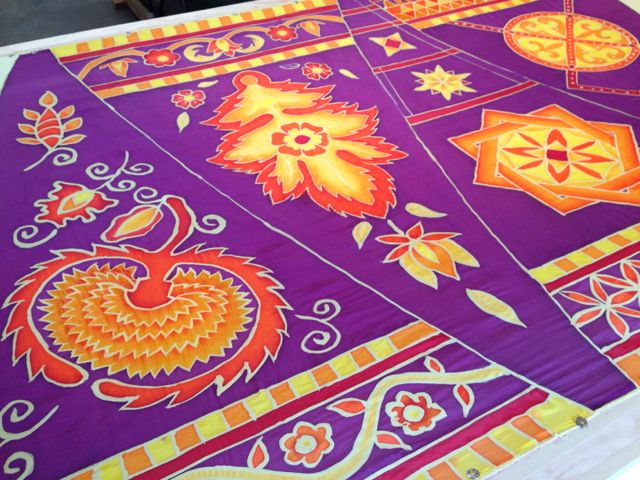
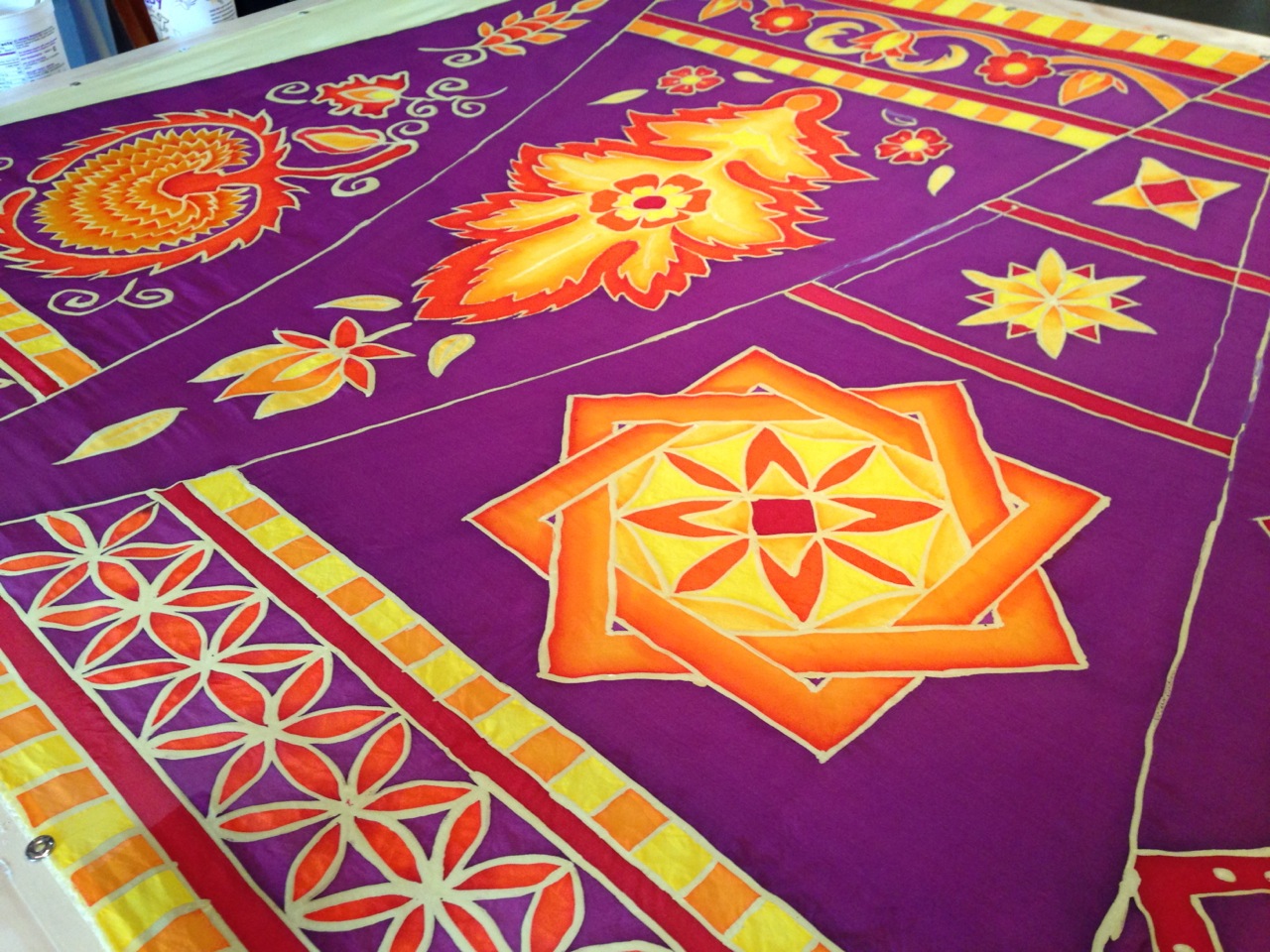
Three practices come together to form my work: The sketchbook, surface design on fabric, and stitch. Drawings become paper sculpture become patterns. Fabric is dyed, over-dyed, discharged, resisted, printed. Panels are free-motion embroidered on a sewing machine and hand-stitched into their final shapes. I am invested in process: Exploring, teaching, documenting, and writing.

Comment » | Uncategorized

Bellwether Art Walk

June 28th, 2010 — 6:05pm

BellewetherI attended the opening of the Bellwether Art Walk,  a group sculpture show in Bellevue that includes one of my pieces. The indoor sculpture is at Bellevue City Hall, a beautiful building with an amazing terrazo floor. The outdoor installations are at the  Downtown Park.

I hadn’t realized that the show was not only national, but international, with 37 artists from places as diverse as New York, Maine, Korea, Australia and Japan. There is also a good showing of local sculptors including Steve Jensen, Michael Johnson, and Julia Haack.  The City of Bellevue did a beautiful job displaying and installing the work and printing a nice catalog and walking map. I was thrilled when I got an email showing the printed materials and found my piece was one of three featured along with Jae Hyo Lee and Christopher Pfeifle.

I didn’t get a chance to go to the park to see the installations there but am planning on doing so soon. The exhibit runs through October 17th and is well worth a trip to Bellevue.

Comment » | Uncategorized

Going to Rio!

June 28th, 2010 — 5:43pm

Rio Patchwork Show in Rio de Janeiro

leafI was invited to show two pieces, Leaf Vessel and Can I Help You?,  in the Rio Patchwork Design Show in Brazil this year. The organizers of the show have a strong desire to introduce their local quilters to art quilts. Through their research they found CQA and invited a number of members to participate in the show. They did a beautiful job with the display of the artwork and the show will travel to two other cities in Brazil.

I was amazed to find out that I won the audience choice award for Leaf Vessel which means I’ll be traveling down to Rio next June to present at the 2011 show! How about that?

Comment » | Uncategorized

SDA/SAQA Reinvention Conference

March 29th, 2010 — 10:58am

I recently attended Reinvention, a conference cosponsored by the Surface Design Association and Studio Art Quilts Association at San Francisco State University. It was my first chance to attend a national conference, and was a great opportunity to meet members of both organizations from outside Washington state. Attendees heard from museum directors and artists their viewpoints about the role of fiber in the art world. And personally, it inspired me to do some hard thinking about my own work.

The conference started with keynote speaker Marci McDade, editor of Fiberarts Magazine, who gave an overview of current fiber exhibitions. Other presenters that day represented museums. Jane Przybysz (pronounced “Prizbee”), of the San Jose Museum of Quilts and Textiles, brought a historical perspective to the question of “What is Fiber Art?” drawing heavily from the book, String, Felt, Thread: the Hierarchy of Art and Craft Through Fiber. Jill D’Alessandro, of the de Young Museum, described the evolution of the Textile Department of the museum.

Stefano Catalani, of the Bellevue Arts Museum, gave a presentation called “Reinvention or Reassertion?: Fiber Art and the Contemporary Identity Discourse.” This presentation was a standout for me because of the artists’ work he showed and because he put their artwork into context by telling the artists’ personal history. He focused the theme of reinvention by highlighting work of three artists who have “reasserted” themselves through the lens of their artwork, Dinh Q Le, Ed Pien, and Mandy Greer. Although each of these artists works in different materials and content, each approaches media from a grounding in culture. Craft is, in each case, a functional part of the meaning.

Later in the day the panelists participated in a question and answer session. The question that caused the most heated discussion was a theory put forth by an audience  member that quilt artists are marginalized by their media. The panel’s response was that any media can be successful as long as artists are intentional about how they use it. Mastery and technique do not make the artist; rather they are applicable only in the way that they convey the meaning of the artwork.

Saturday’s sessions started with a dynamic panel of emerging artists: Mung Lar Lam, Lacey Jane Roberts, and Bren Ahearns, moderated by Victor De La Rosa, head of the textiles department at SFSU. Each of the artists works in fiber as a way of addressing gender politics. Mung Lar Lam’s work includes her “Ironings” series in which she performs the act of ironing in an exhibition setting, creating sculptural work by pressing creases into cloth. The performative aspect of the work provides context and a way for the viewer to engage through observation and discussion with the artist. Lacey Jane Roberts knits her artwork using a Sparkle Barbie Knitting Machine, incorporating ideas of gender assignment for children and definitions of craft. Lacey has created barbed wire fences, knitting both the wire of the fence and a pink yarn covering. Her work asks many questions including “Who is being excluded?” and “Who is locked away?” Bren Ahearn uses stitch as a way to question definitions of gender and sexuality, crosstitching “manmade” onto samplers, and stitching images of men cage fighting, bringing the homoerotic nature of this macho sport out into the open for reconsideration in another media.

A panel on environmental art, an historical look at the magazine American Craft, and a talk by four experienced “elders” in fiber rounded out the day. Michael Rohde, a weaver for over thirty-five years, talked about his process and evolution in the craft, moving from his work exploring colorways and pattern to more thematic work. Consuelo Jimenez Underwood, a Latina artist whose life story is as fascinating as her work, talked of finding her voice in political art. Throughout the conference, panels discussed themes including “Art vs. Craft”, messy art vs. mastery in craft, and the perceived disrespect of quilts, and other “women’s work”.

I learned of some upcoming opportunities to get involved in these national organizations. SAQA is looking for a Washington State representative; you may contact Pat Gould, the assistant executive director of SAQA, for more information, at patriciagould@msn.com. SDA is starting an Ambassador Program to get more people involved at the state level. We’ll hopefully be starting a small group of Seattle area SDA members. I’ll relay more information about that as it becomes available.

I would definitely recommend attending a national conference. I came away from the conference reinvigorated about my work. The overarching theme that resonated for me was the necessity of intentionality in art, whatever your media. I tend to work very intuitively, often not verbalizing themes and meaning in my work until it comes time to write an artist’s statement. My new resolve is to be more mindful in my work, bringing meaning to the forefront while (hopefully) still tapping into the intuitive choices I make.

Comment » | Uncategorized

Fiber Sculpture Class

March 9th, 2010 — 4:09pm
Therese's prototype

Therese's prototype

This last weekend I taught an intensive at Pratt Fine Arts Center, Fiber in Three Dimensions. I was nervous because, although I’ve taught plenty of technique classes, this felt different. I wasn’t sure if I would be able to teach how to see and design in three dimensions. I had a terrific group of artists to work with, each with their own vision, each willing to try something new.

IMG_6275

Susan's bowl

We started the first day with a slide show survey of fiber sculpture, beginning the conversation about designing in 3d and how to support your structure. Our first project, what I think of as a pinch pot, was a circle of fabric that we cut and overlapped to create dimension, adding structure through stitch. A very basic and simple technique, yet versatile and a good way to feel the transition between two- and three-dimensions and how quickly that can happen.

In the afternoon I showed a second slide show introducing my sculptural technique, a multipanelled piece using peltex as an inner layer to add structure. They started sketching their ideas with the plan of starting on patterning the next day.

Judy's piece

Judy's piece

The next two days they spent drawing, patterning, and layering their pieces. Some people worked faster than others. As always, it would have been nice to have had more time to work. Only one person finished her piece, although she called said it was a prototype and had plans to embellish it further.

I felt it was a successful class, the samples all worked, the slide shows were helpful and well-received. Only one student had much experience with sewing, the others came from working in other media including jewelry and printmaking. Several  of them were apprehensive about sewing at first but felt much more confident by the end of the weekend. One woman, a jeweller, had no confidence in her ability to sew and wasn’t sure she was going to stay. By the end of the class, she was talking about buying a sewing machine!

I’ll definitely teach this one again!

Susan's piece

Susan's piece

Lisa's piece

Lisa's piece

Comment » | Uncategorized

Now What?

January 20th, 2010 — 6:02pm

Now that I’ve finished the work for the Foster White show and had time for a breather, there’s the perennial question, “Now what?” It’s not a comfortable place to be as an artist, but something that must be muddled through. I usually spend this time cleaning my studio (I even washed the floor!), looking at books and magazines, and mentally pacing. I pick things ups, I put them down, nothing seems to fit. It’s a good time to try new techniques and make messes, not sure of where I’m heading.

I have a new class at Pratt coming up, Fiber in Three-Dimensions, so that gives me some focus. I’m trying some other ways of working in 3-d, some other structural materials that have been sitting on the shelf. I’m also doing some research on other artists sculpting in fiber. I also picked up a book at the library, Transparency in Textiles by Dawn Thorne, that’s got me thinking about revealing the space within.

And so I continue, picking things up, putting them down, until the next big thing reveals itself to me.

Comment » | Uncategorized

Foster White Show

January 14th, 2010 — 7:57pm

fa008

Shape clay into a vessel;
It is the space within that makes it useful.
–Tao Te Ching

Cameron Anne Mason’s work is informed by the exploration of surface design on fabric. Her fiber work explores the intersection of nature, civilization, and time. The Vessel Series references the nature of vessels as both useful and sacred objects.
Cameron’s three-fold process incorporates multiple surface design techniques, three-dimensional integration, and stitch embellishment. This synthesis gives the work both structure and form.  Dyeing starts with white or black fabric. Color and patterning are added through shibori, breakdown printing, screen printing, discharge, resist, and immersion.
Cameron is largely self-taught in her work in fiber, but also draws upon her background in design and performance. She has an active teaching schedule at Pratt Fine Arts Center and other studios. She has exhibited locally as part of the MadArt Window Project, Sound Transit’s START on Broadway, The Phinney Neighborhood Center Gallery, Bumbershoot, and in group shows of the Contemporary Quilt Art Association.
Cameron seeks original revelation and wonder, reading fabrics as maps implying ancient messages, ciphers waiting to be translated into form.

Comment » | Uncategorized

West Seattle Art Walk

October 8th, 2009 — 2:51pm

WSeattle blogI’m participating in the October West Seattle Art Walk. My work will be at The Body Bar at 4156 California Avenue SW. The show is a combination of work from MadArt with some recent work. It’s nice to see some of the panels from MadArt, which played the part of backdrop to the 3-d pieces, get a chance to stand out on their own. I’ve also included three of the Bird panels from Seen/Unseen from last year’s Sound Transit’s Art on Broadway. Those plus a couple other 3-d pieces make the show. It actually all works together well and is a nice compliment to the business where they do massage, acupuncture, facials, and other treatments.

For more information follow this link.

http://westseattleartwalk.blogspot.com/

See you there!

Comment » | Uncategorized

My Studios

October 1st, 2009 — 6:26pm

estan1I have the extreme good fortune to have two studios, one inside my home where I do all my sewing and one outside the home.

Easelstan, a house converted into art studios, is where I do all my dyeing and construction and also store my past projects. There are five artists with studios in the building and we have a great collegial relationship. We do a weekly crit group, rotating among us. I’m the only fiber artist, but I find the feedback of my studiomates across mediums is really helpful.

My studio is in the converted attic space. It’s about 250 square feet but has several challenges. One is the stair well in the center of the space and the other is the sloped walls. Being short, I have a fair amount of usable floor space and when the owners created the studios they brought the walls in to create storage space under the eaves. This is great  for storing past projects, tools, and extra materials.

Here’s my studio looking West.

estan12

And here the view looking East.

estan13

Here’s some of my storage.

estan2

Some of the features I love in my studios are a sink and exhaust fan for mixing dyes, skylights, and a view of the mountains to the West.

estan3

Although the space is divided up, I do have room for a large work area of two six foot tables put together along their length. I use a sheet of vinyl across them to create a smooth(ish) surface. I also have three other tables that I can move around as needed.

estan8

I like to keep my studio pretty tidy. I find I need an uncluttered space to be creative, no collections or decorations to distract me. Here are some of the ways I store my materials.

estan5

estan4estan11

My home studio is where I do my sewing and also does double duty as a guest room.I have a U shaped work area for sewing and cutting.

home1

I have a design wall that I made using a flannel backed picnic blanket. It’s a little less than ideal but I make it work. The door leads to a small office I share with the family where I can catch up on email, blog, or listen to music.

home2

Again, storage is always an issue. Here are some of my solutions.

home4home3

I hope you enjoyed the tour! I admit that I cleaned up a bit for company.

12 comments » | Uncategorized

Virtual Open Studio

September 30th, 2009 — 2:41pm

image_thumb1I’m participating in Quilting Arts Magazine’s virtual Open Studio. Click on the link below to reach the website of Studios Magazine. And check back in the next few days to see pictures from my studios.

http://www.interweavestore.com/Mixed-Media/Magazines/Studios-Fall-2009.html.?a=qa090928

Comment » | Uncategorized

Back to top